
Most analysts as well as company executives say the rally in commodity prices is ill-timed coming just when firms were recovering from disruptions such as demonetisation & introduction of GST

Modi to receive Lokmanya Tilak National Award, constituted by Tilak Smarak Mandir Trust in 1983, to honour the legacy of Lokmanya Tilak

Investors are showing some interest in the downstream energy cycle. Refiners and marketers, especially the public sector (PSU) oil marketing companies (OMCs) could see a revival of marketing margins. Lower crude oil and gas prices may also improve margins in industries like paints, logistics, synthetic fabrics, plastics, and fertilisers. In the medium-term, however, there could be a supply overhang affecting OMCs as new refining capacities are scheduled to be commissioned, especially in China, and this may lead to a drop in the refining margins as capacity would be surplus to demand until and unless there's a pick-up in global growth.

The finance ministry said on Tuesday that high energy and commodity prices due to the Russian invasion of Ukraine may provide an upside risk to inflation and continued vigil is required. "Going forward, elevated energy and commodity prices may act as an upside risk to the inflation outlook in the near-medium term. "Given the inherently unsustainable nature of high prices, international commodity prices are expected to level off early with an increase in supplies outside the crisis zone," the department of economic affairs said in its latest monthly economic report for February.
Changes in global oil and gas rates matter more to India's economy than other major economies because the country imports around 87 per cent of its oil, half of its gas in the form of LNG, and over 60 per cent of its LPG.
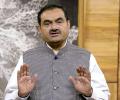
After a tumultuous past few days that almost halved value of the Adani group, embattled tycoon Gautam Adani-led conglomerate had some pressure eased on Friday as two global rating firms stuck with their calls on its credit profile and its French partner backed its investments in the group firms. Also for the first time since January 24, shares of the group's flagship firm Adani Enterprises ended in positive territory after erasing an intraday loss of 35 per cent. Adani Ports and SEZ also ended 8 per cent higher. This is after a over $100-billion rout in value of group stock since the US short seller Hindenburg Research accused Adani group of stock manipulation and accounting fraud.

International oil prices have hit a six-month low, helping Indian fuel retailers breakeven on petrol but they continue to lose money on diesel - the most used fuel in the country, officials said. The world's best-known crude benchmark, Brent was trading at $94.91 per barrel on Thursday after concerns of a global recession led to it slipping to a six-month low of $91.51 on the previous day. The current rates are a relief to India, which is 85 per cent dependent on imports for meeting its oil needs.

In Dubai, A Ganesh Nadar encountered high speeds on smooth-as-silk-roads, no bureaucracy, gold, Mr Toad's. And snow!
With India's imports exceeding exports, weak rupee does more harm than good. Analysts, however, say that rupee depriciation is positive for export-oriented sectors such as IT services, pharmaceuticals, textiles and automobiles

Around 15 years ago, when Reliance Industries (RIL) struck natural gas in the Krishna-Godavari (KG) basin off the east coast, the government made plans to supply that fuel cheaply to scores of generators that sprang up in India triggered by the discovery. Most of the plants, which account for 6 per cent of India's total generation capacity, operate sparsely after the KG-D6 area first failed to meet production targets, and then finally shut shop. Affordable domestic gas was why those thermal plants came up and the rate of the fuel today is why those generators hardly operate. Record liquefied natural gas (LNG) rates may yet again unravel India's ambitions to expand use of gas in industries, households and vehicles. Rates, while volatile, may stay strong this decade as developed nations with higher purchasing power embrace gas as the transition fuel.
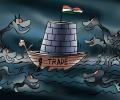
The growth in world trade is expected to slow down to one per cent in 2023, due to global uncertainties, according to a WTO forecast. The World Trade Organization (WTO) has also projected a growth of 3.5 per cent in global trade this year, as against the April estimate of 3 per cent. World trade is expected to lose momentum in the second half of 2022 and remain subdued in 2023, as multiple shocks weigh on the global economy, the multi-lateral body has said in a statement.

One of the challenges for those car graves is that Indian owners often find markets for their old cars rather than send them to scrapyards.

The EV industry is at an inflection point and batteries will play a critical role ahead -- batteries and related components typically constitute 35-45 per cent of an EV's costs.

There's a straightforward relationship between economic activity and power consumption. If economic activity increases, so does power consumption. Since the latest GDP (gross domestic product) data indicates India's growth rates exceeded expectations in the second half if the 2022-23 financial year (H2FY23) and GDP estimates of FY24 are strong, we would expect power consumption to rise as indeed it has. There is also a direct relationship between power consumption and National Thermal Power Corporation or NTPC's results since the public sector undertaking (PSU) is the largest power generator in India.

New Delhi's timing couldn't have been worse, both for India's fledgling electric vehicle (EV) sector and prospective electric bike buyers. It was hard to miss the perfect storm brewing for India's EV industry since early 2022. On one hand, you had several accidents involving battery fires that unnerved consumers; on the other, uncertainty had crept in over subsidies.

10 non-bank and non-finance stocks from the BSE500 Index universe that offer an optimal blend of low valuation, reasonably robust revenue and earnings growth in recent quarters, a strong balance sheet, and most importantly, positive cash flow from their operations.

In the coming months, globally as well as in India, rice might remain a hot potato.

Even as the Group of Seven (G7) price cap on Russian crude oil enters into force as of December 5, India has been assured it will continue to receive the existing deep discounts on Russian oil, for the time being, informed officials. "We have been assured by our Russian partners of uninterrupted crude supplies at the existing rates for the time being. "There were a lot of reports of changes in (India's) buying patterns after the global price cap took hold.

Many CEOs said they plan to give special leave to women employees so as to encourage their participation in the workforce.
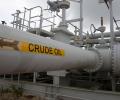
The government has slashed the windfall profit tax levied on domestically-produced crude oil as well as on export of diesel and ATF following a drop in global oil prices, according to an official order. The levy on crude oil produced by companies such as Oil and Natural Gas Corporation (ONGC) has been cut steeply to Rs 1,700 per tonne from Rs 4,900, the order dated December 15 said. Crude oil pumped out of the ground is refined and converted into fuel like petrol, diesel and aviation turbine fuel (ATF).

International oil prices retreated from an over seven-year high but was still above $100 a barrel and continue to pose threat to India's inflation rate and current account deficit. While there are no supply concerns as the oil route remained open, consumers will feel the pinch when PSU oil firms start passing on the increase in international rates through a revision in petrol and diesel prices, which have been on a pause for over three-and-a-half-months in view of elections in Uttar Pradesh and four other states. The government is "closely monitoring the situation" and will "take appropriate steps as and when required", a top official said. Brent crude oil surged past $105 per barrel on Thursday for the first time since August 2014, following Russia's invasion of Ukraine.

Neetu Yadav and Kirti Jangra teamed up to create an app that is possibly the platinum standard for apps targeted at Bharat.

Half the stocks in the Nifty 100 index have seen a reduction in their target price by analysts this year due to fears of lacklustre earnings growth and uncertain economic environment. Adani Green Energy, FSN E-Commerce (Nykaa), Adani Ports & SEZ and Indus Towers are among the companies that have seen the maximum cut in TPs during the first three months of calendar 2023, shows Bloomberg data. On the other hand, Canara Bank, JSW Steel and Bank of Baroda have seen the highest increase in TPs.
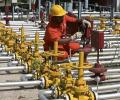
The oil ministry has stopped making fresh allocation of natural gas from domestic fields to the city gas sector, threatening the viability of Rs 2 lakh crore investment planned in the sector besides leading to a hike in CNG and piped cooking gas prices to record levels, sources said. Despite a decision of the Union Cabinet to give 100 per cent gas supply under 'no cut' priority to the city gas distribution (CGD) sector, current supplies have been maintained at March 2021 demand level. Besides, the process of allocating gas on a six-monthly average drawl also is punishing the CGD entities driving growth.

Cooking gas LPG price on Wednesday was hiked by Rs 50 per cylinder, the third increase in rates since May on firming international energy prices. Non-subsidised LPG now costs Rs 1,053 per 14.2-kg cylinder in the national capital, up from Rs 1,003 previously, according to a price notification of state-owned fuel retailers. Common households pay non-subsidised rates for the cooking gas they buy, after the government restricted subsidy to just poor beneficiaries who got connections under the Ujjwala scheme.
There is positive correlation between crude oil prices and Indian equities and investors can expect more upside after the recent rally in Brent crude price.

Since infrastructure projects have long gestation periods, investors need to enter them with a long horizon of at least 10 years.

State Bank of India (SBI) is willing to work with Russian banks not facing sanctions and remain on the Society for Worldwide Interbank Financial Telecommunication (SWIFT) network to open a special rupee vostro account (SRVA) for invoicing in Indian currency. The country's largest lender in a statement said it has not been identified as the nodal bank for handling Russia-related transactions. In July, the Reserve Bank of India (RBI) allowed banks in India, including SBI, to open an SRVA to promote invoicing in Indian rupee, subject to certain safeguards. Accordingly, the bank in a statement said it is "making necessary arrangements and processing requests received from various banks, including Russian banks", following guidelines laid out by the RBI.

Finance Minister Nirmala Sitharaman on Wednesday announced hiking the capital expenditure by 33 per cent to Rs 10 lakh crore for infrastructure development for 2023-24 and will be at 3.3 per cent of the GDP. Presenting the Budget for 2023-24, she said the newly established infrastructure finance secretariat will assist in attracting more private investment. "Capital investment outlay is being increased steeply for the third year in a row by 33 per cent to Rs 10 lakh crore, which would be 3.3 per cent of GDP.

Former India coach Ravi Shastri advised Virat Kohli that he must not drop the tempo of his innings after getting a start.

Prime Minister Narendra Modi on Sunday accused the opposition of playing 'negative politics' and said now the entire country is rooting for corruption, dynasty and appeasement to 'quit India'.

You finally end up with an army of midgets led by midgets, notes Sandeep Goyal.

Prime Minister Narendra Modi will visit Abu Dhabi on July 15.

India's negotiating posture at the multilateral negotiations should be aligned with a significantly transformed development strategy domestically.' 'The positions the country takes at the negotiations will then carry credibility, says Shyam Saran, former foreign secretary and India's chief negotiator on Climate Change 2007-2010.

'A change we have seen after the Russia-Ukraine war is the energy crisis in Europe.' 'Earlier, in Europe, people used to change their clothes after 5 washes, now they are using it till 15-20 washes.' 'They used to change their entire wardrobe after 2 months or so, but because of the economic conditions, it has changed.' 'It has affected exports as 40% of our exports is to Europe, 30% to the US and 10% to the UK.' 'The war has to end for better days to come.'

The first five months of 2023 have witnessed at least six major events/trends that augur badly for global economic and socio-political prospects, points out Shankar Acharya, former chief economic adviser to the Government of India.

Power generating companies (gencos) that use imported coal to produce electricity, may find it difficult to switch on their idle units immediately in the wake of high fuel costs, several players have told Business Standard. Recently, the Union power ministry had invoked Section 11 of the Electricity Act mandating all imported coal-based plants to generate power at full capacity. However, some generating companies that use imported coal, argue that it is simply unviable for them to produce power when the price of coal in the international market is high, while the per-unit price of power has been capped at Rs 12 per unit on the domestic power exchange.

Whether this remains under control in the coming months will depend on the future intensity and spread of the Russia-Ukraine war, and the effectiveness of the Indian government's response, points out A K Bhattacharya.

A few years ago, when top officials of Indian state-run refiners went to Dubai to negotiate a crude oil supply contract, a senior official from state-owned Saudi Aramco told them, "We can negotiate on anything, but I am the last man standing for you. "Nobody can offer the range of crudes we do with certainty," an official who was part of the negotiating team recalls. Perhaps that explains why Saudi Arabia is less concerned about losing its place as India's premier oil supplier to an upstart like Russia, which emerged from nowhere to become India's biggest crude oil supplier in September and October.

Indian oil and gas exploration companies work in silos.
